

Blessed are the Peacemakers
Elder Gary E Stevenson

In this talk by Elder Stevenson, he asks, “Can I truly become a peacemaker when the world is in commotion, when my heart is filled with fear, and when peace seems so far away?”
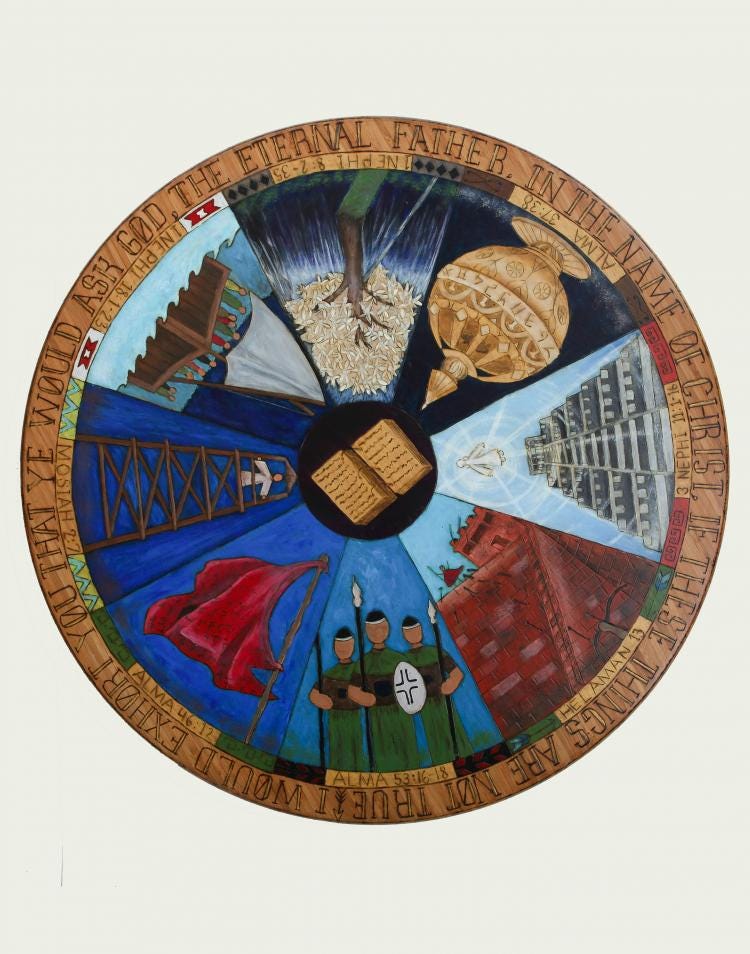
Art: Mary Jane Smith, My Peace I Give Unto You (Are These Things Not True), 2017. The Book of Mormon Art Catalog, [URL].
Find the Talk HERE
Watch it:
Relief Society Lesson Slides: HERE
Doctrine:
Let’s review the process of identifying the Doctrine, Principles and Applications taught in a conference talk. We want out testimonies to grow on the solid foundation of doctrine - being able to answer for ourselves why things are the way they are. Doctrine answers Why? Principles are the answer to What do we do? Applications can answer How?
In this talk, the Doctrine answers the question: Why is Peace even possible? and Why should we pursue it? The answer is the Gospel of Jesus Christ and our desire to be like him.
“Peace comes through the gospel—through the Atonement of Jesus Christ, the ministration of the Holy Ghost, and our own righteousness, sincere repentance, and diligent service.”
Gospel Topics and Questions- including a great list of the Words of Christ about Peace from the scriptures: HERE
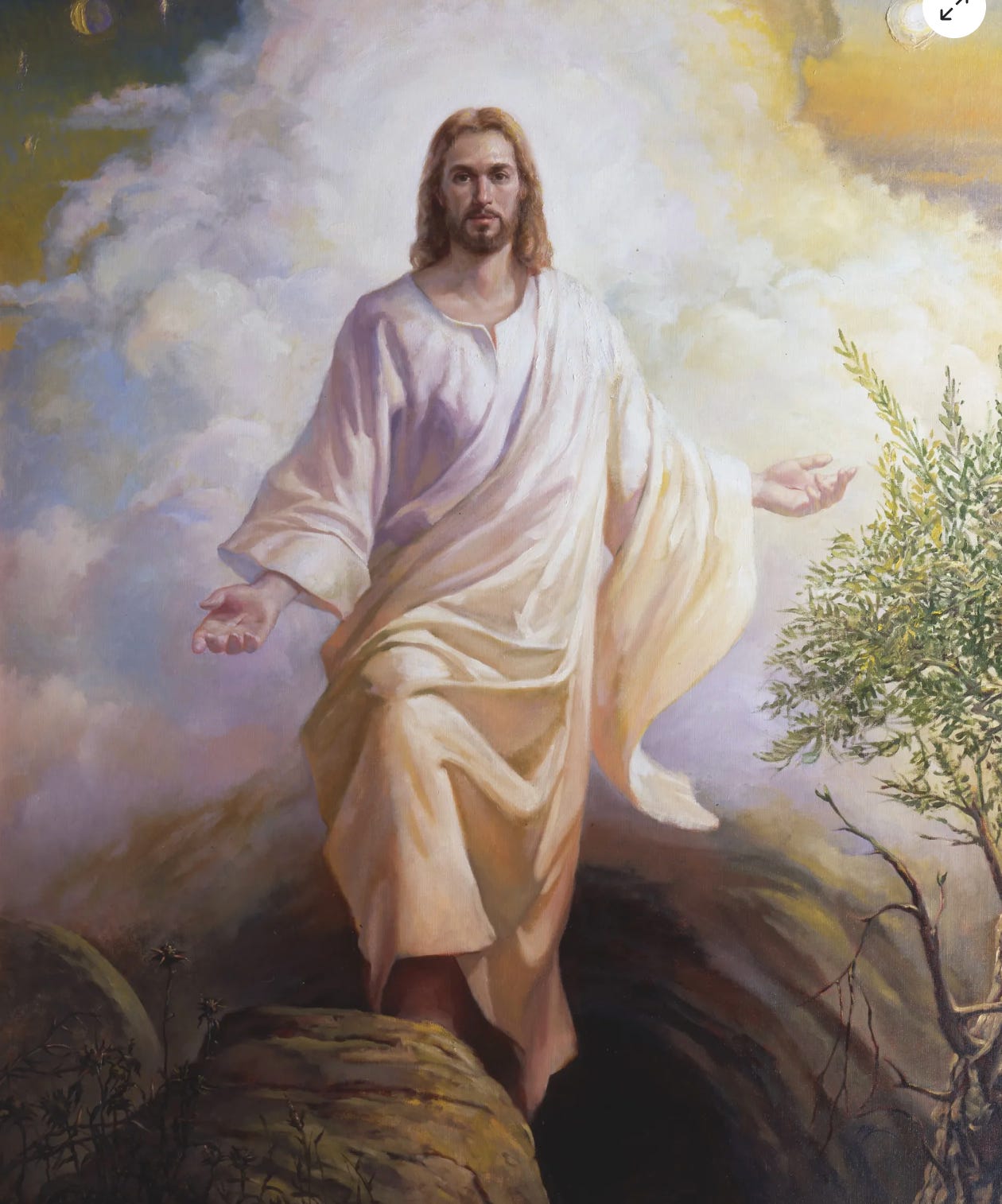
“In the scriptures, peace can mean either freedom from conflict and turmoil or the inner calm and comfort born of the Spirit that God gives to His faithful Saints.”
See Guide to the Scriptures: Peace. HERE
Principles:
The principles answer the question What? What do we do to find/gain/build Peace? The answer - We become Peacemakers.
“Blessed are the peacemakers: for they shall be called the children of God.”
A Peacemaker is “A person who brings about or promotes peace (Matt. 5:9; 3 Ne. 12:9). A peacemaker may also be someone who proclaims the gospel (Mosiah 15:11–18).”
See Guide to the Scriptures: Peacemaker. HERE
Applications:
Applications answer the question of How? How can we become Peacemakers in the world we live in, which is not naturally at peace? Elder Stevenson gives us some ideas. As we understand the Doctrine and Principles and pray for guidance, we can receive answers for our own personal situations. Applications based on true doctrine and principles can be different from person to person. The important thing is that we are all facing Jesus, not that we are all doing the same things.
Heart
“These children’s responses are evidence to me that we are all born with divine inclinations toward kindness and compassion.”
Home
“To be peacemakers, we forgive others and deliberately build others up instead of tearing them down.”
Community
“When we come to know the glory of God, then we “will not have a mind to injure one another, but to live peaceably.”
More about Imam Muhammad Ashafa and Pastor James Wuye HERE
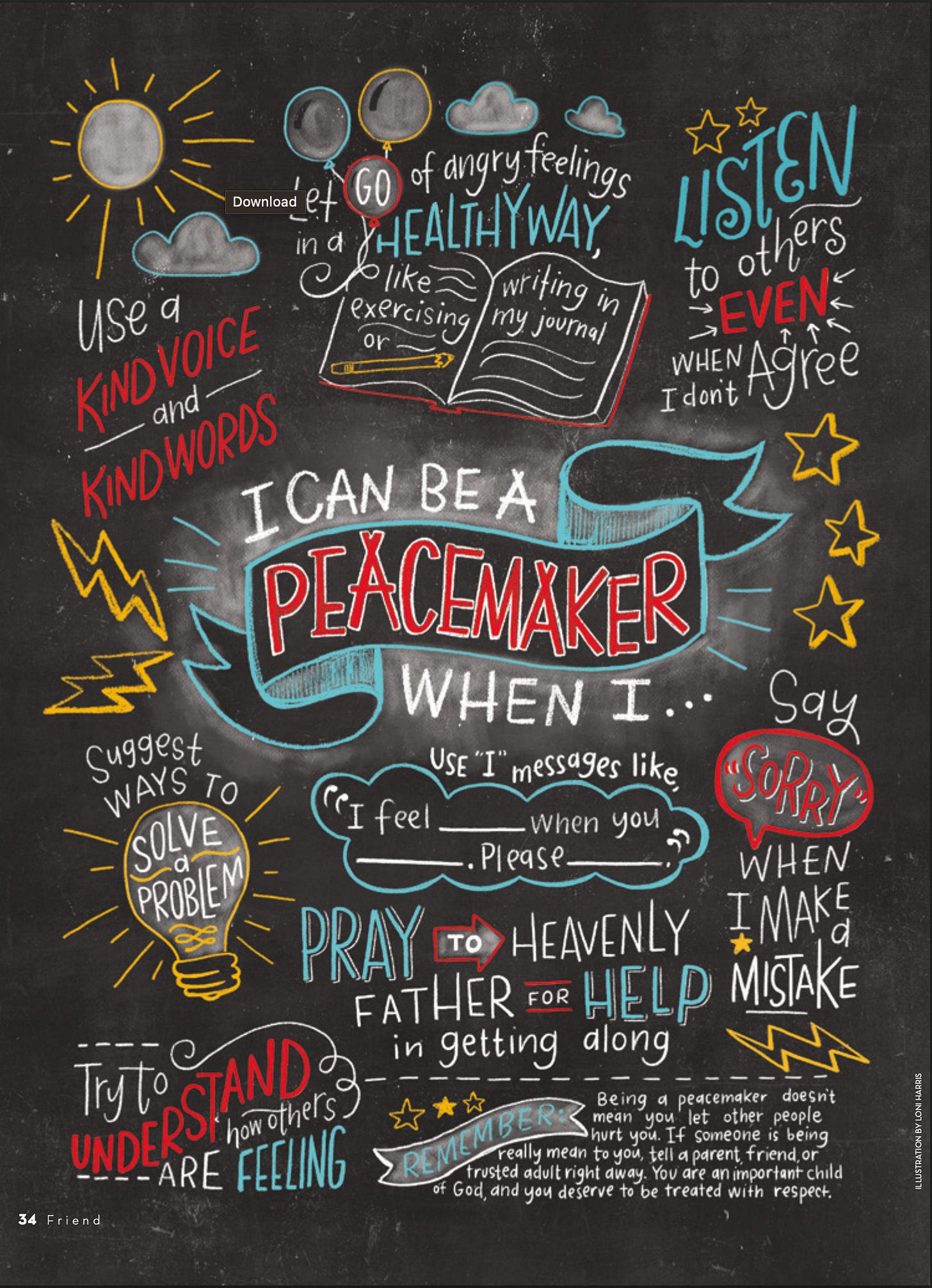
Elder Stevenson gives several examples of how modern peacemakers could behave, including a One Week Peacemaker Plan.
“In summary, I offer an invitation. Peacemaking demands action—what might that be, for each of us, starting tomorrow? Would you consider a one-week, three-step peacemaker plan?
A contention-free home zone: When contention starts, pause and reboot with kind words and deeds.
Digital bridge building: Before posting, replying, or commenting online, ask, Will this build a bridge? If not, stop. Do not send. Instead, share goodness. Publish peace in the place of hate.
Repair and reunite: Each family member could seek out a strained relationship in order to apologize, minister, repair, and reunite.”
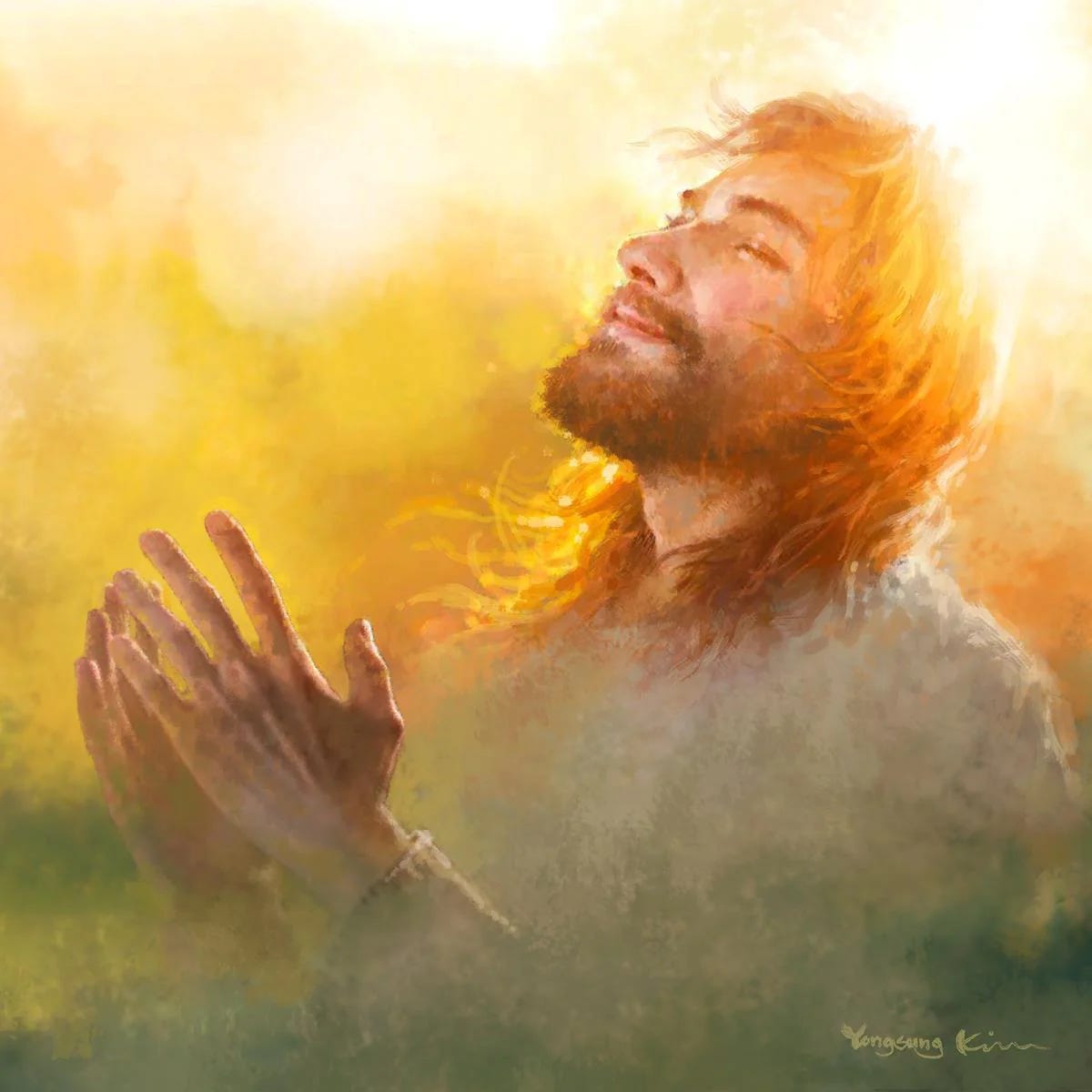
Image: Youngsung Kim
Further Study
Russell M Nelson: Peacemakers Needed Apr 2023
Theodore Burton: Blessed are the Peacemakers Oct 1974
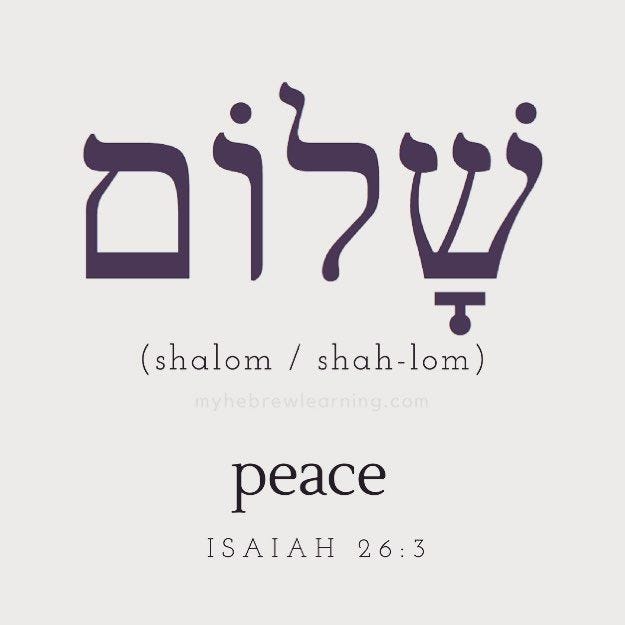
The Hebrew word for peace is shalom (שָׁלוֹם). It means more than just the absence of conflict and also encompasses wholeness, completeness, well-being, and prosperity. (See the differences between Peace and Peace of God in the Topical Guide)
This reminds me of the lesson we had about being Spiritually Whole in Him (Camille Johnson). Peace of God is something we gain when we choose to be Spiritually Whole AND we are more effective Peacemakers when we have chosen to be spiritually whole, whether or not we are healed physically.
St. Frances of Assisi
Lord, make me an instrument of your peace.
Where there is hatred let me sow love;
Where there is injury, pardon;
Where there is doubt, faith;
Where there is despair, hope;
Where there is darkness, light;
And where there is sadness, joy.
[In John Bartlett, comp., Familiar Quotations (Boston: Little, Brown and Co., 1980), p. 138]
Teachings of Joseph Smith Chapter 29, Living with Others in Peace and Harmony.
In Conclusion
Elder Stevenson’s talk concludes with the following statements about peace.
Peacemaking is a Christlike attribute.
Peacemakers are sometimes labeled naive or weak—from all sides. Yet, to be a peacemaker is not to be weak but to be strong in a way that the world may not understand.
Peacemaking requires courage and compromise but does not require sacrifice of principle.
Peacemaking is to lead with an open heart, not a closed mind.
It is to approach one another with extended hands, not clenched fists.
Peacemaking is not a new thing, hot off the press. It was taught by Jesus Christ Himself, both to those in the Bible and the Book of Mormon. Peacemaking has since been taught by modern-day prophets from the earliest days of the Restoration even to this day.
We can evaluate our progress in becoming a Peacemaker by comparing our actions with these statements. It is tricky to establish boundaries and also be a peaceable person, but it can be done. Be patient with yourself and with others as we find ways to forgive and give grace while we figure it out.
I encourage you to use some of Elder Stevenson’s ideas - or some of your own! to become a peacekeeper in the most stressful of situations. Phone a friend for encouragement!
Happy Studies!
